
Mulch Ado About Nothin'

So you’ve built your raised beds, added your soil, planted your plants, and… now what? You’ve put so much love into these tender little plant babies and you want to do everything you can to help them grow. As you stand in front of your garden anxiously awaiting your first fruits, you wonder if there is anything else you can do to help your garden thrive beyond the obvious notions of watering and fertilizing. Well, there is one more thing you can add to your to-do list that will help your plants AND your little friends in the soil microbiome - mulching!

Mulch, at its core, is simply “material” that is spread over the soil in a garden bed or really any area that has dirt. This can be as rudimentary as fallen leaves in the winter that haven’t been raked up, or as intentional as specialized bark blends with included enhancements like compost, mycorrhizae (beneficial fungi), and organic ph adjusters. There are also plastic/rubber mulches available but I would advise against using those in the garden - the plastic will inevitably leach into your soil and it doesn’t break down to add anything of value (these rubber mulches can be seen being used in landscapes but are best reserved for heavy foot-traffic areas like playgrounds).
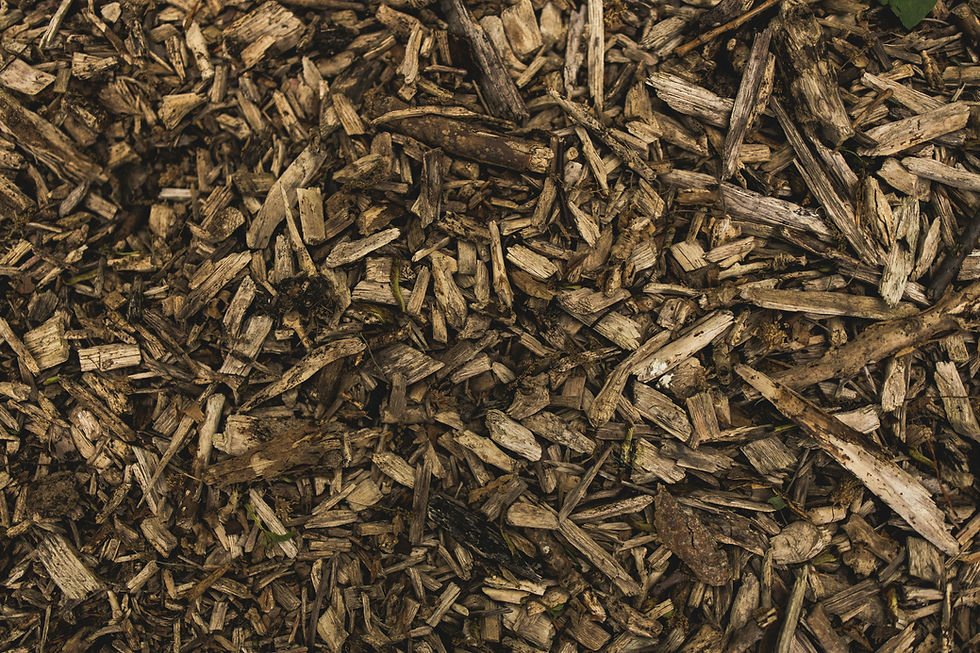
There are many types of mulch, both organic and inorganic (inorganic being things like rubber and rock/gravel) - but when we are mulching for plant health we always want to stick with organic materials. Organic in this sense is referring to the origin of the material, but of course looking for a USDA certified organic product is always a good idea! Examples of organic mulch are wood chips, tree bark, straw, pine needles, fallen leaves, and grass clippings. An easy way to think about it is what might naturally be found covering the soil in nature.
More Mulch = Happier Plants
Mulching the soil has a multitude of benefits. A garden that has a 2-3 inch layer of mulch can save nearly 30% of water usage, as it prevents water evaporation by trapping that moisture in the soil. It also acts as a natural temperature control for your soil - this means that between the water retention and cooler soil temperature the plants not only have more water actively available, but they are spending less energy surviving the hot summer temperatures and can therefore put more energy into water absorption and fruit/flower production.

Mulch also acts as a natural weed suppressant. A good layer of mulch actively blocks the sun from weed seeds and prevents them from germinating, which can ultimately save you hours of stress and labor from constant weeding. It isn’t fool-proof but when it comes to weeds, any help is welcome.
Speaking of blocking out unwelcome guests - mulch is a good way of preventing fungal and bacterial infection from soil-borne pathogens. Some plant pathogens are spread when soil is splashed onto the leaves of plants during watering. A layer of mulch functionally eliminates this by providing a physical barrier between the soil and the plant’s leaves.
As the organic mulch breaks down over time, it actively becomes compost in the soil. This means that as you continue to garden (and mulch) year after year, your soil will become deeper and richer in nutrients and therefore require less fertilizer for your plants (or potentially even none).
How to Apply Mulch

Once you have chosen your organic mulch and brought it home, you should apply a 2-3 inch layer for the best outcome. Too little and it won’t be able to perform its desired functions, and too much will result in overly wet soil (leading to root rot and attracting certain pests) and can even cut off oxygen and suffocate your plants. It is a good idea to replace your mulch at least once a year or as needed.
When laying down your mulch, you want to be sure not to place the mulch directly up against the stem/base of your plants. Placing it right up against your plants will act as a sort of wet blanket and can cause rotting and susceptibility to fungal infection.
As wonderful as mulch is in the garden, it's also a good idea to pick a few spots in your yard to leave mulch-free, as some native bee species are actually ground burrowers and a thick layer of mulch can prevent access to the soil.
Bonus: Don’t Want to Mulch? You Don’t Have To!

An alternative to using mulch in your garden and/or landscape is to use a living mulch! This is just a groundcover plant that provides most or all of the same benefits as using organic mulch. Perennial groundcovers can be used as a long standing living mulch in your landscape and cover crops like clover or rye (among others) can be planted in a no-till garden and then removed for spring planting. I will make sure to write a more elaborate post on what cover crops are and how to use them in the future. For now, visit a local nursery and ask an assistant to help you pick a plant that is suitable as a cover crop/living mulch for your planting area.


Comments