
Dogwood Trees (Cornus spp.)

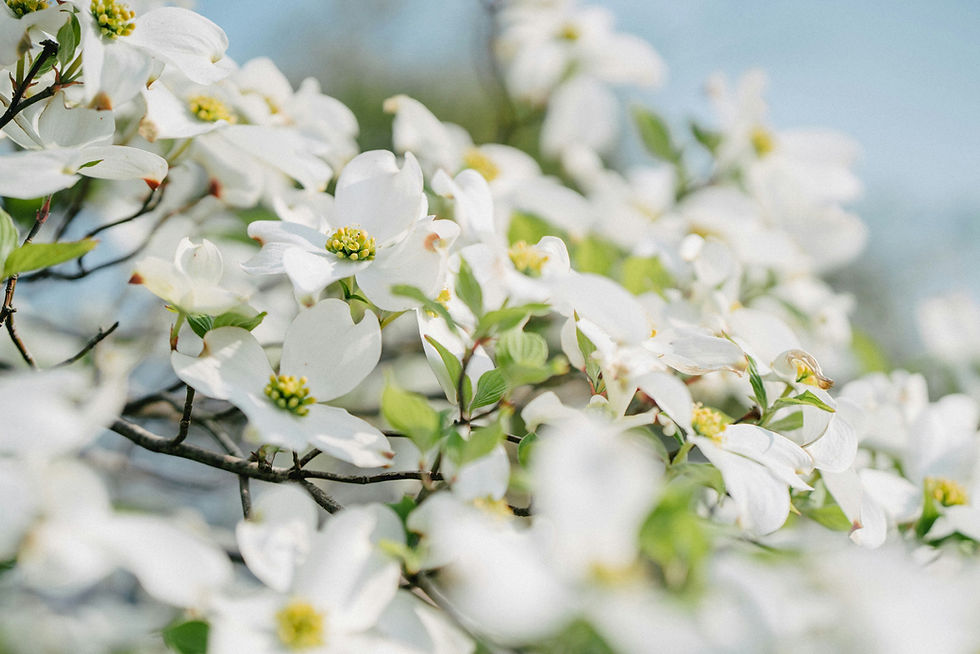
One of my favorite parts of driving into Yosemite valley in the Springtime is the iconic image of massive dogwood flowers sprinkled throughout the native landscape. A beautiful shade tree found in the high Sierras, the Dogwood tree is the perfect mix of function and beauty in both wild and curated landscapes.
Types of Dogwoods

There are several different types of dogwoods: Flowering Dogwood (Cornus florida), Korean Dogwood (Cornus kousa), Pacific Dogwood (Cornus nutallii), Red-Twig Dogwood (Cornus sericea), and the fruiting Cornelian-Cherry Dogwood (Cornus mas). Don't be fooled by their common names, every type of dogwood produces both flowers and fruits. Flowering Dogwood is bred specifically to have a heavier flower production than other types, and (while all dogwoods produce fruits in the Fall) the Cornelian Cherry Dogwood is one of the only types that produces fruits that are palatable (although I've never tasted it, the Korean Dogwood is said to also have a palatable fruit produced in early fall) - it's said that its fruits taste similar to cherries or wild plums. Cornelian Cherry Dogwood is especially unique because of its small yellow flowers in lieu of the classic large white or pink flowers you typically associate with dogwoods.
Native to our area specifically is the Pacific Dogwood (Cornus nutallii). Although it is prolific in our forests, this variety can be difficult to grow in a nursery setting. Most commonly if you are shopping for a native dogwood you will find a native hybrid like ‘Eddie's White Wonder’ (Cornus florida x nutallii), which is a crossbreed between the Pacific Dogwood and the Flowering Dogwood.
Biology of the Dogwood Flower

We can all easily recognize the Dogwood flower by its huge white (or pink) petals… But did you know that those petals aren’t actually petals at all? They are a special type of leaf called bracts (in this case specifically, petaloid bracts). Their main function is to protect young and vulnerable flower buds from the elements, but they also help pollinators identify the location of the tree’s flowers for pollination. If you look closely at the “flowers”, you’ll notice a teeny tiny cluster of little green flowers (also called an inflorescence) at the center that are the true flowers of the Dogwood tree. These flowers then turn to a fruit in the late summer or early fall that is a wonderful attraction for wildlife.
Care Requirements for Dogwoods

Dogwoods in our area tend to do best with a partially shaded environment, and they prefer well-drained acidic soil. Thorough watering is essential in the first few years after initial planting, after which these trees are relatively drought tolerant (although any tree will benefit from regular water, and will likely have a more showy bloom period as a result). Dogwoods, like all plants, will also benefit with regular or semi-regular fertilizing. You can find tree and flower fertilizer at most any nursery, and some are made specifically for acid-loving plants… or you can refer to my post about using coffee for soil acidity here).
Dogwoods are susceptible to several diseases and insect infestations, so it is recommended to treat them with appropriate measures (organic fungicides and horticultural oils like neem) as soon as you notice symptoms (like mildew, leaf spots, or insect infestation) beginning to appear.
Conclusion

I’ve never met a person who doesn’t love the Dogwood tree. A staple in our native landscape and a beautiful centerpiece to a curated garden, the Dogwood provides a visual effect for us and nutrition for our local wildlife. So whether you are planning a wildlife habitat garden or a native landscape you really can’t go wrong with the Dogwood tree.


Fascinating stuff! It really inspires one to grow a native garden with this tree as the centerpiece